
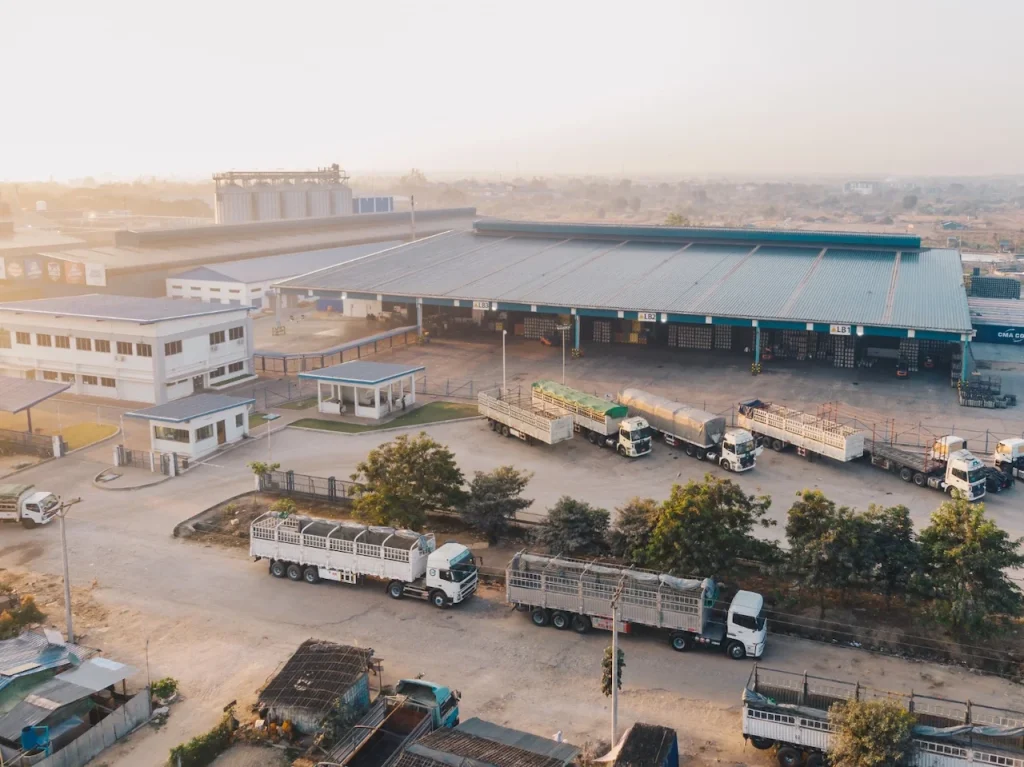
 An AED for factories is an automated external defibrillator placed across an industrial site so a nearby colleague can deliver a shock during sudden cardiac arrest, in the minutes before emergency services arrive. Industrial sites make that harder than most workplaces: production floors, warehouses, loading bays, outdoor yards, workshops, staff areas and separate blocks spread people out, and shift patterns mean the site is never uniformly staffed. What decides the outcome is not owning a defibrillator. It is how quickly one reaches the person on the floor.
Why Sudden Cardiac Arrest Is A Workplace Risk For Factories
Sudden cardiac arrest can affect any worker regardless of age or apparent fitness, and factory conditions add their own strain:
- Heat exposure and physical exertion on production floors
- Long shifts, rotating shifts and night work
- Electrical and machinery hazards
- An ageing workforce in some operational roles
- Distance between work areas and the nearest help
- Reduced staffing during non-operating hours
Survival chances fall with every minute that passes, and resuscitation guidance places early defibrillation among the chain of survival links that most influence whether someone lives. That makes AED coverage a site planning question, not only a medical one. Malaysian employers also carry a duty to take reasonably practicable steps to protect people at work.
Common Emergency Response Gaps In Large Industrial Sites
Most factories that own a defibrillator still lose time to the same avoidable gaps:
- A single unit kept in the main office or clinic, far from where staff work
- Long retrieval routes across large floor plates and separate blocks
- Units placed behind locked doors or inside restricted zones
- Staff who do not know where the nearest unit is kept
- Unclear or missing signage along corridors and stairwells
- Thin responder coverage on night and weekend shifts
- Contractors and visitors who receive no briefing on emergency equipment
- Expired pads or batteries discovered only during an incident
- No agreed procedure for guiding ambulance crews into the site
Key Components Of Factory AED Readiness
Readiness is built in layers, and a weak layer costs minutes. Device availability puts wall-mounted units within reach of every work area, while signage, consistent cabinets and posted floor plans help a responder find the nearest one without searching. Trained responders make sure somebody can act on every shift, and escalation procedures at the guardhouse or central monitoring bring outside help to the scene. Access planning stops locked doors from delaying retrieval, and upkeep such as pad and battery replacement keeps the unit usable the moment it is opened. Workplace guidance treats these as one programme rather than a purchase, recommending that units be installed so a responder can reach one within a few minutes.
Where Factories Should Place AED Units
Placement should follow the routes staff already walk, so retrieval stays short from any point on site. Priority areas usually include:
- Production floors and assembly lines
- Warehouse and storage areas
- Loading bays and despatch zones
- Main gates and guardhouses
- Canteens, prayer rooms and rest areas
- Locker rooms and washroom corridors
- Maintenance areas and workshops
- Boiler, chemical and high-heat zones
- Outdoor yards and vehicle compounds
- Control rooms and administrative offices
- Stairwell landings between floors
Units should sit at a consistent height, in the open, and never behind a door a responder cannot pass through. The same logic applies to any premises, which is why where a business installs its AED units matters as much as how many it owns.
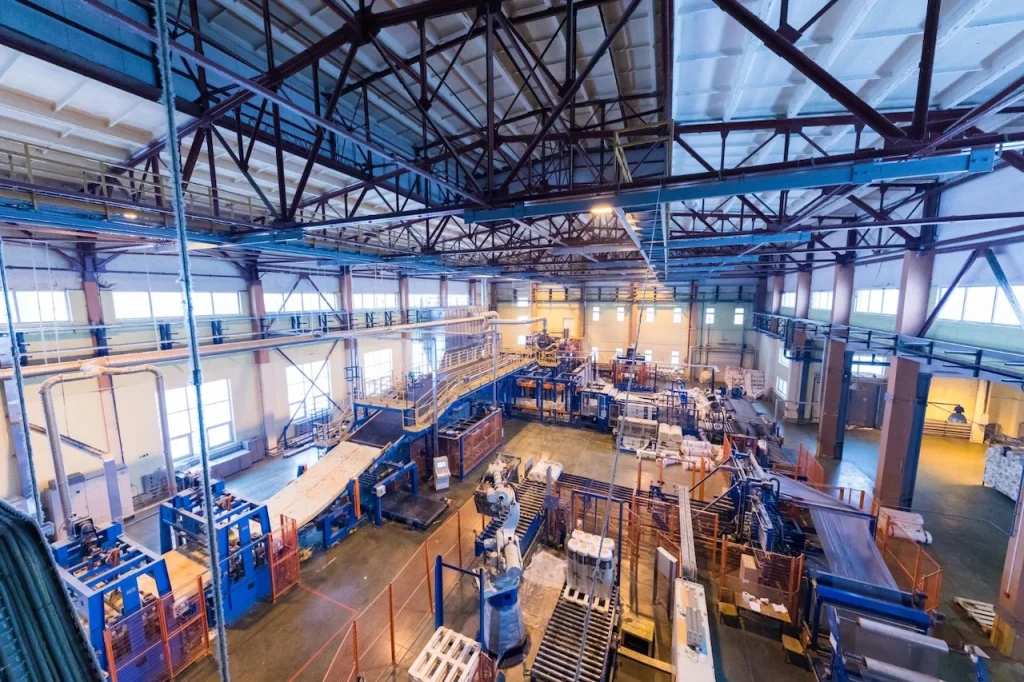
How Signage And Wayfinding Help Staff Find An AED Under Pressure
Placement only works if a stressed colleague can find the unit, and recognition depends on familiarity rather than sophistication. The universal AED sign, a green square carrying a heart and lightning symbol, exists so the marker reads the same way in any facility and can be paired with an arrow to point the way. Around that, keep signage at eye level and at corridor junctions, use one cabinet type and colour site-wide, post floor plans at entrances and guardhouses, keep access clear of stock and pallets, cover AED locations in staff and contractor induction, and walk the routes periodically to confirm nothing has been blocked.
How AED Coverage Fits Into A Factory Emergency Response Plan
The defibrillator is one link in a chain, and the chain runs in a set order:
- A colleague recognises the collapse and raises the alarm
- Chest compressions begin immediately
- A second person retrieves the nearest AED
- The guardhouse or monitoring team escalates to emergency services
- Access control and barrier gates are cleared for the ambulance
- Security personnel guide the crew directly to the scene
- The incident is recorded and reviewed afterwards
Security systems shorten this chain when they are planned alongside AED placement. Access control can release doors along the response route, barrier gates clear the way for an ambulance, and monitoring support keeps the escalation moving while colleagues stay with the patient.
Best Practices For Keeping Factory AED Units Rescue Ready
A unit that fails when opened is worse than no unit at all, because the site believed it was covered:
- Assign a named owner for each unit on site
- Run scheduled visual and status indicator checks
- Track pad and battery expiry before they lapse
- Keep spare pads on site for consecutive use
- Restock the response kit after every use or opening
- Log every check for audit and inspection purposes
- Refresh CPR and AED training across all shifts
- Include AED response in emergency drills
- Re-review placement whenever the site layout changes
What To Consider Before Choosing An AED For A Manufacturing Facility
Safety officers, human resources teams and plant management usually weigh up:
- Site size, layout and number of separate blocks
- Walking distance from each work area to the nearest unit
- Shift patterns and staffing during non-operating hours
- Indoor and outdoor placement conditions such as heat, dust and humidity
- Ease of use for staff who are not medically trained
- Availability of adult and paediatric response options where relevant
- Training coverage across every shift
- Consumable supply and replacement support
- Integration with existing security, monitoring and access systems
- Ongoing maintenance and readiness support
Whether purchase or rental suits the facility better is worth settling early, because it changes how consumables, servicing and replacement are handled over the life of the programme.
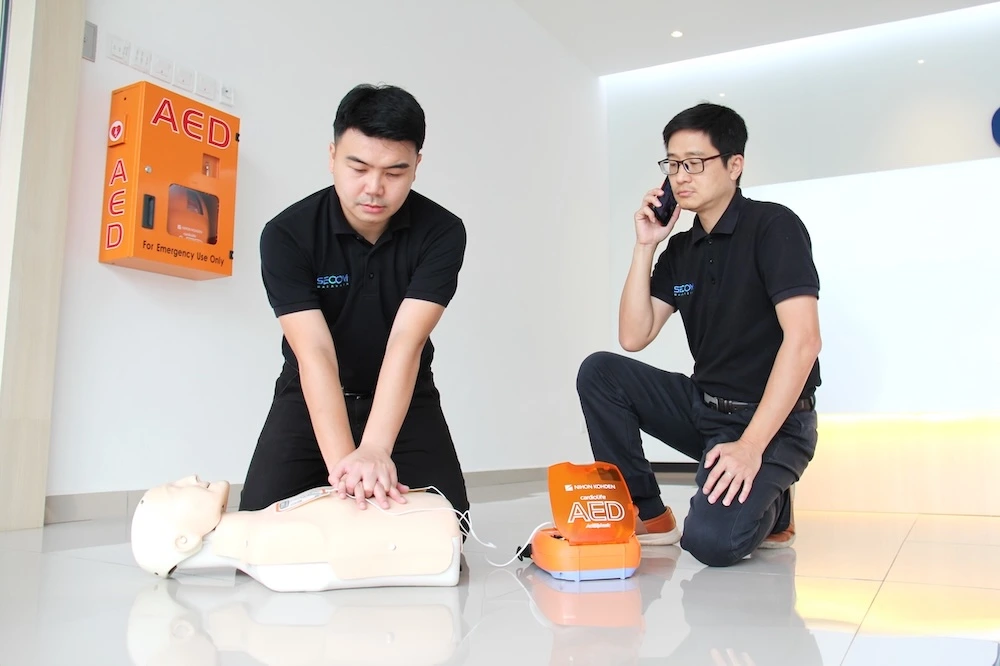
How SECOM Malaysia Supports Emergency Response Readiness In Industrial Sites
SECOM Malaysia is a total security solutions provider that supports organisations with integrated physical security and emergency response readiness rather than standalone equipment. For manufacturing and industrial sites, SECOM Malaysia supplies automated external defibrillator units and helps plan AED coverage across large compounds, alongside site risk assessment and security consultancy, CCTV surveillance, access control systems, barrier gates, alarm systems and intrusion detection, remote and central monitoring support, and security personnel where needed. SECOM Malaysia treats AED placement as part of the site response setup, so retrieval routes, access points and escalation procedures are designed together rather than one device being mounted and forgotten.
Shorten The Distance Between A Collapse And A Shock
Factory AED readiness rests on layers that have to hold together: units placed where people actually work, signage that reads instantly under stress, trained responders on every shift, escalation procedures that reach emergency services quickly, access routes nobody has to unlock, and upkeep that keeps every unit rescue ready. Get those right and the distance between a collapse and a shock is measured in steps rather than corridors.
Protect your workforce across every shift with well-planned AED coverage for your industrial site. Contact SECOM Malaysia to explore AED and integrated emergency response solutions for factories and manufacturing facilities.
FAQs
What is an AED for factories?
An AED for factories is an automated external defibrillator placed across an industrial site so staff can deliver a shock during sudden cardiac arrest before emergency services arrive.
Where should a factory install an AED?
Factories should install AED units along routes staff already use, covering production floors, warehouses, loading bays, guardhouses, canteens, workshops and outdoor yards.
How many AED units does a manufacturing plant need?
Coverage is guided by walking distance rather than a fixed count. Units should be placed so that retrieval from any work area stays short, even during a shift with reduced staffing.
Can untrained workers use an AED?
Yes. An AED guides the user through each step with voice and visual prompts, and it will not deliver a shock unless the heart rhythm calls for one. Resuscitation authorities state that AED use should not be restricted to trained personnel, though training still improves speed and confidence.
Is an AED required for factories in Malaysia?
Malaysian workplace safety law requires employers to take reasonably practicable steps to protect people at work, which places emergency readiness, including access to a defibrillator, within an employer duty of care.

