
How to Audit Your Current Security Services Provider: Performance, Reporting, and Compliance

Businesses often overlook auditing their current security services provider, yet regular reviews can uncover performance, reporting and compliance gaps that increase operational risks or hidden costs. As organisations grow, once suitable providers may no longer meet evolving security requirements.
Auditing your security services provider helps determine whether existing protection measures still provide adequate coverage against theft, vandalism and emergencies. For organisations with multiple locations, reviews increasingly extend beyond guards alone to include remote monitoring capabilities.
Regular audits may also reveal whether investments in monitoring, manpower and security systems improve operational readiness or expose weaknesses that affect incident response and business continuity.
Performance Audit Checklist
Evaluating a security provider should go beyond confirming whether guards are present or systems are installed. Effective audits examine how personnel, monitoring technologies, and reporting processes perform under real conditions.
Businesses commonly assess guard performance, alarm response, CCTV reliability and monitoring standards to determine whether providers meet expected service levels.
1. Guard Effectiveness
Security guards often serve as the first response during incidents, making consistent performance critical. Businesses should review patrol completion through logs, GPS records or guard tour systems, while simulated scenarios can help assess response and escalation speed.
Providers should be able to show relevant training records for emergency response, conflict de-escalation, fire procedures and first aid where applicable. Businesses using security guard services may also evaluate retraining frequency, fatigue management practices and incident reporting standards.
Businesses assessing professional security guard standards and accountability may review how guards use technology, monitoring tools and reporting systems to improve performance. Regular patrol quality matters because security guards play a critical role in preventing theft and vandalism, particularly in higher-risk environments requiring visible deterrence and faster response.
Questions to ask:
- Are patrol schedules followed consistently?
- How often are guards retrained?
- Is fatigue management monitored?
- Can training records be produced quickly?
- Are incidents documented with evidence?
2. CCTV & Alarm Reliability
Reliable monitoring depends on more than installed equipment. Poor maintenance, weak connectivity or delayed alerts can reduce visibility during incidents and affect investigation quality afterwards.
Businesses should review system uptime logs, false alarm frequency, footage clarity, remote accessibility and recording reliability. Weaknesses in alarm monitoring, burglar alarm system workflows or CCTV monitoring may reduce incident visibility and slow investigations.
Organisations relying on security remote monitoring for continuous oversight and verification may also review how alerts, footage and escalation procedures perform under continuous operation.
3. Central Monitoring Response
Fast response times remain one of the clearest indicators of provider effectiveness. Monitoring centres should demonstrate consistent alert handling, escalation procedures and uninterrupted coverage.
Businesses should audit average response times, handover procedures between monitoring teams, CCTV verification speed and whether coverage remains continuous throughout operating hours.
Companies comparing providers may benefit from evaluating response expectations between outsourced and in-house monitoring services, particularly when response speed forms part of contractual performance requirements. Providers operating a central monitoring system should demonstrate measurable service standards and escalation workflows without coverage gaps.
Reporting Transparency Breakdown
Strong security providers deliver actionable reporting rather than simple incident notifications. Reports should help businesses understand recurring risks, identify trends and measure whether security performance improves over time.
Monthly reports should include incident logs with evidence, response time metrics, patrol compliance rates, false alarm records, trend analysis and improvement recommendations. Delayed reports, vague summaries, missing timestamps or a lack of measurable KPIs may indicate weak accountability.
Multi-site businesses often require dashboards similar to those used in scalable monitoring architectures designed for central oversight, allowing easier tracking of incidents, performance trends and recurring risks across locations.
Industry-Specific Security Audit Considerations
Different industries may require different audit priorities depending on site risks, compliance expectations and operational environments. A strong security services provider should be able to explain how their solutions adapt to each business setting.
For education institutions, audits should assess whether the provider can support the best security system for school environments through controlled access, visitor management, CCTV visibility and clear incident escalation procedures.
For government facilities and critical infrastructure, businesses should evaluate whether a real time infrastructure monitoring system can support centralised visibility, faster alert handling and reliable escalation across sensitive locations.
For healthcare facilities, audits should consider healthcare security compliance in Malaysia by reviewing access control, visitor flow, emergency procedures, privacy expectations and incident documentation.
For logistics operators, providers should demonstrate how a cargo area surveillance system can help monitor loading bays, warehouses, vehicle movement and high-value goods areas.
For manufacturing and industrial sites, audits should review whether an industrial perimeter protection system supports perimeter visibility, intrusion detection, controlled entry points and faster response to unauthorised access.
For retail businesses, provider reviews should assess whether a shop security system in Malaysia can support theft prevention, staff safety, alarm response, CCTV monitoring and after-hours protection.
Step-by-Step Audit Process
Conducting a provider review does not need to be overly complex. Businesses can complete meaningful audits by following a structured process that reviews documentation, site performance, reporting quality and response standards.
1. Gather Documents
Request recent reports, training certificates, incident logs, contracts and compliance documentation. Providers should be able to supply records within a reasonable timeframe, demonstrating transparency and operational readiness.
2. Conduct On-Site Inspections
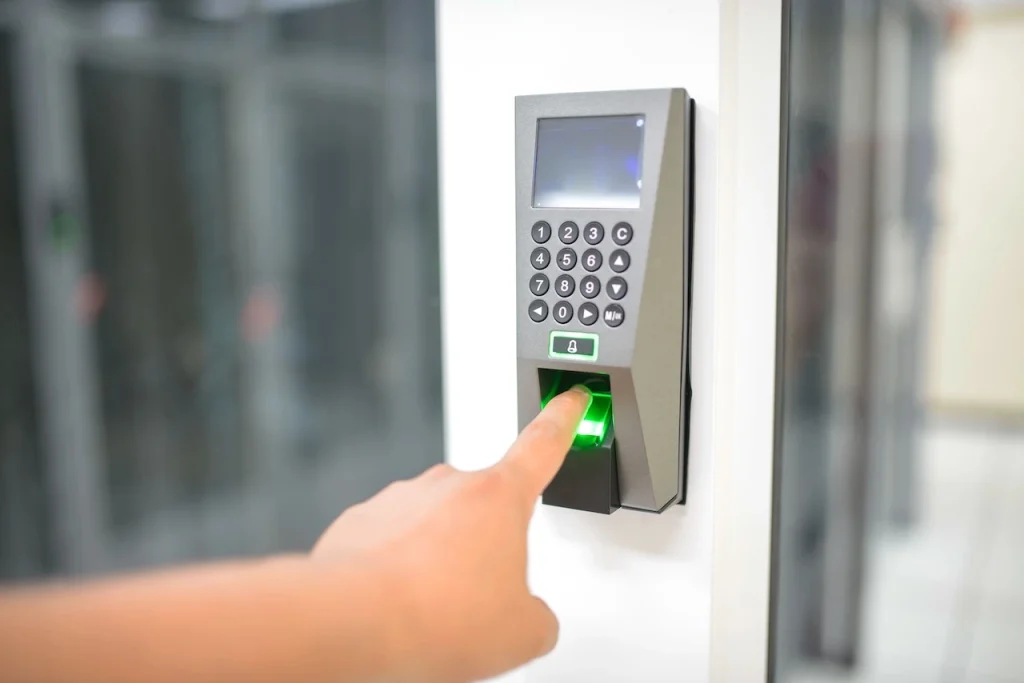
Walk the perimeter with supervisors while testing alarms, CCTV views, guard awareness and emergency procedures. This process often highlights weaknesses in door access control systems, access card system permissions and broader monitoring workflows.
Audits should also review whether office security systems align with current risks and whether access permissions remain updated.
3. Run Performance Tests
Simulate incidents such as perimeter breaches, panic button activations or unauthorised access attempts. Measuring response times helps determine whether providers meet expected service standards and whether escalation procedures work as promised.
4. Interview Stakeholders
Employees often identify recurring issues that reports fail to capture. Ask whether guards behave professionally, whether incidents are handled effectively, whether reports are useful and whether concerns remain unresolved.
5. Score and Decide
Use a simple scoring system across response times, monitoring, compliance, reporting and guard performance. Scores consistently below expectations may indicate a need for provider improvement or replacement.
Red Flags Triggering Immediate Action
Certain warning signs may indicate that a security services provider no longer meets operational requirements and should be reviewed immediately. Repeated unresolved incidents, slow response times, missing patrol records, weak reporting or poor monitoring visibility suggest gaps in accountability and performance.
Businesses should also pay attention to delayed incident escalation, inconsistent guard rotations, missing evidence logs, frequent false alarms, outdated training records or limited transparency in reports. Over time, these issues may reduce response effectiveness and increase exposure to theft, vandalism or disruptions.
Long-term performance issues become easier to identify with remote monitoring systems providing real-time visibility and alerts, where response trends and provider performance can be measured more consistently. Clear CCTV notices should also remain visible in monitored areas to support awareness.
Why Businesses Upgrade to SECOM Malaysia Standards
Strong security performance increasingly depends on integrated infrastructure rather than standalone services. Organisations in Malaysia often combine security guard, CCTV, alarms and monitoring technologies to improve response coordination.
With over 30 years of supporting Malaysian businesses, SECOM Malaysia provides integrated monitoring, reporting standards and operational support designed for factories, offices and commercial environments.
Businesses seeking a more accountable security company in Malaysia often prioritise measurable performance, reporting transparency and stronger incident management. SECOM Malaysia’s approach combines monitoring, access control and broader security solutions to improve accountability across multiple sites.
Frequently Asked Questions About Auditing Security Services Providers
1. How often should businesses audit their security provider?
Businesses should review provider performance regularly or after major incidents. Regular audits help identify weaknesses in reporting, monitoring and response procedures before they affect operations.
2. What should a security provider report include?
Security reports should include incident logs, response times, patrol compliance, evidence records, false alarm rates and improvement recommendations. Detailed reporting improves accountability and supports better risk management decisions.
3. Why are response times important when auditing security providers?
Slow response times may increase operational risks and reduce the effectiveness of guards, CCTV and monitoring systems during emergencies. Measuring response performance helps determine whether providers meet expected service standards.
4. When should businesses consider changing security providers?
Repeated unresolved incidents, weak reporting, missing compliance documentation and poor response performance may indicate the need to review alternative providers. Consistent underperformance often signals larger gaps in accountability or operational readiness.

Accountability, Not Just Coverage
Selecting a provider goes beyond comparing manpower or equipment. Long-term effectiveness depends on response consistency, reporting quality, compliance standards and whether providers demonstrate measurable performance over time.
Regular audits help businesses identify weaknesses early, improve accountability and ensure investments continue supporting operational requirements as risks evolve.
Strengthen operational readiness with SECOM Malaysia’s integrated monitoring and security services. Contact SECOM Malaysia today for a customised quote tailored to your business security requirements.

