

Real-Time Security Monitoring in Malaysia: How Live Alerts and Rapid Response Protect Every Industry
Many break-ins are only discovered the next morning, when someone finally replays the CCTV footage. Real-time security monitoring in Malaysia closes that gap by watching sites as events happen and acting on them straight away.
What Is Real-Time Security Monitoring?
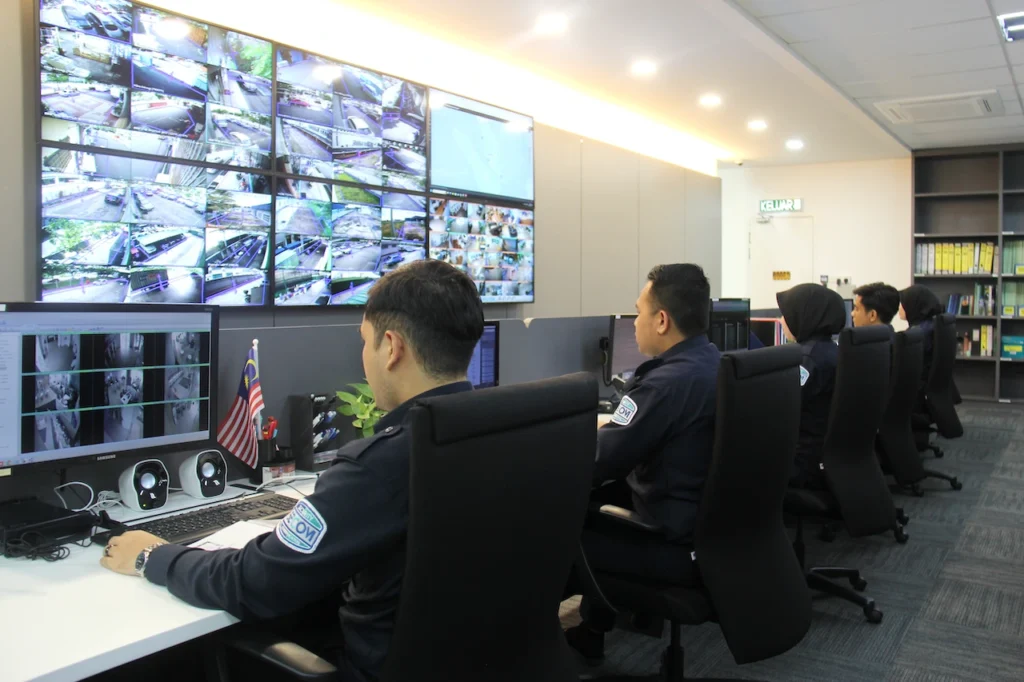
Real-time security monitoring is a service where alarms, sensors and cameras send signals to a monitoring centre staffed around the clock. Operators verify each event and start a response while it is still happening, following recognised minimum requirements for monitoring, receiving and processing alarm messages. Self-monitored systems only send alerts to a phone that may not be checked.
Why Real-Time Monitoring Matters for Malaysian Businesses
Without live monitoring, most sites face the same gaps:
- CCTV that records incidents nobody sees as they happen
- Alarms that go unheard at night, on weekends and on public holidays
- False alarms that are ignored until a real one is missed
- Slow escalation when staff are unsure who to call
- No record of who responded, and when
Key Components of a Real-Time Monitoring System
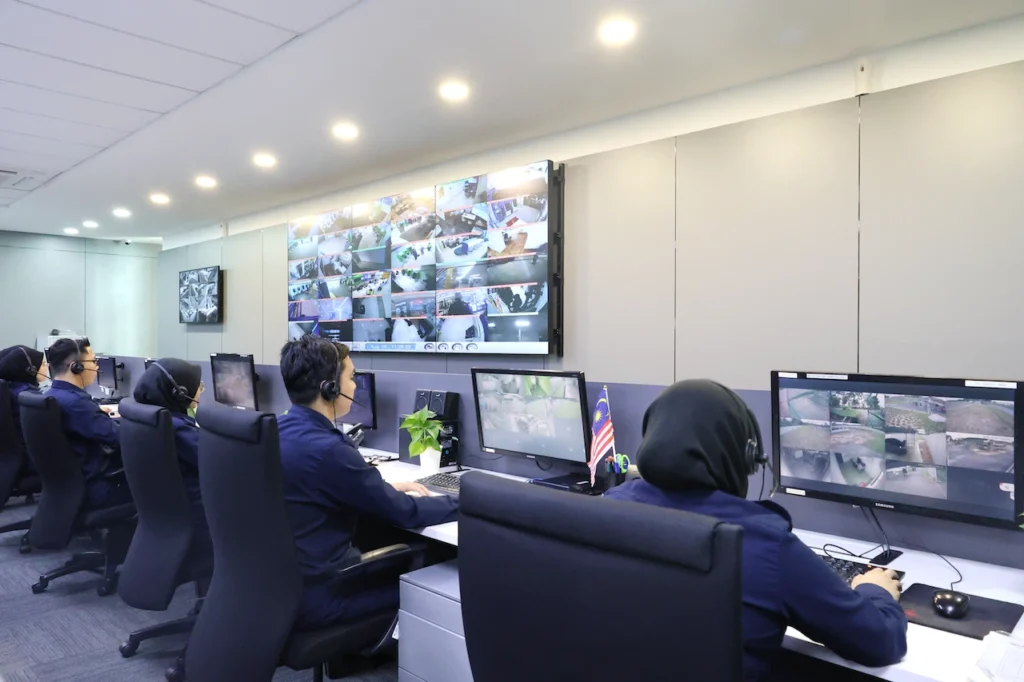
A real time monitoring system links several layers from detection to response, with a central monitoring system receiving every signal and remote CCTV giving operators eyes on site.
| Security Layer | Purpose | Example Solution |
| Detection | Picks up intrusion, fire or panic events on site | Burglar alarm system, intrusion sensors, electric fence |
| Visual verification | Confirms whether an alarm is real before action is taken | IP CCTV camera with interactive remote CCTV surveillance |
| Central monitoring | Receives, prioritises and tracks every signal around the clock | Central monitoring system (CMS) |
| Response | Sends trained personnel to the site when an event is confirmed | Security and emergency response service |
| Patrol oversight | Confirms guards complete their rounds on time | Patrol monitoring system |
| Reporting | Keeps an incident log and audit trail for review | Security system management service |
How Real-Time Monitoring Works: From Alert to Response
A typical alert moves through five steps:
- Detection. A sensor, alarm or camera on site is triggered.
- Prioritisation. The signal reaches the monitoring centre and is ranked by urgency.
- Verification. An operator checks live CCTV to confirm whether the threat is real.
- Response. The operator contacts key holders and dispatches a response team, or alerts the authorities.
- Reporting. The incident is logged and reported to the client.
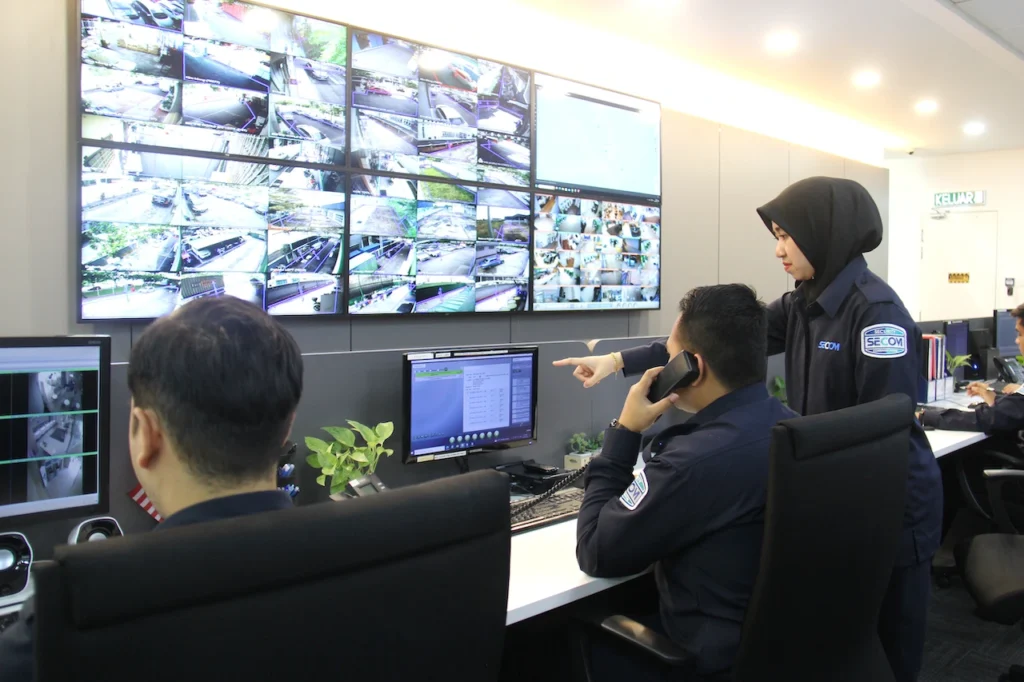
Verification separates real-time monitoring from a basic alarm. Under a verified response approach, the alarm company calls the police only if a crime has occurred or been attempted, cutting wasted callouts.
Real-Time Security Monitoring by Industry
Monitoring priorities change from one industry to the next.
Data Centres
A real time monitoring system for data centres watches perimeters, server halls and restricted zones, in line with guidance on monitoring physical intrusion alarms and surveillance equipment. Explore data centre security solutions.
Government and Critical Infrastructure
Utilities, substations and other unmanned sites rely on a real time infrastructure monitoring system instead of a permanent on-site presence. Read about remote monitoring for critical infrastructure and government and critical infrastructure security.
Banking and Financial Institutions
Bank branches and ATMs need panic alarms and verified after-hours intrusion alerts, and Bank Negara Malaysia expects data centres to be physically secured from unauthorised access. See banking security solutions.
Healthcare
A remote monitoring system for hospitals covers open buildings, pharmacies and wards, and protects staff on night shifts. Staff should know whether someone is always monitoring the video. See healthcare security solutions.
Logistics and Warehouses
A real time warehouse monitoring system watches loading bays, high-value stock and large perimeters that guards alone struggle to cover. See logistics security solutions and warehouse security best practices.
Manufacturing and Industrial Sites
Factories need live visibility of production floors, raw material stores and wide perimeters. Learn more about real time factory monitoring and manufacturing and industrial security.
Retail
Retailers face after-hours break-ins and cash handling risks, and multi-outlet chains need one central view of every store. See retail security solutions.
Best Practices for Real-Time Security Monitoring
These habits keep real-time monitoring effective:
- Pair every alarm zone with a camera view for quick verification
- Keep key holder contacts and escalation steps up to date
- Agree response procedures for intrusion, fire and panic events
- Test alarms, cameras and communication links regularly
What to Consider Before Choosing a Real-Time Monitoring Provider
Before choosing a provider, check:
- Whether the monitoring centre is staffed around the clock, all year
- How alarms are verified before a response is sent
- Whether the provider has its own response team
- Integration with your existing CCTV, alarm and access control systems
- Support across your locations in Malaysia and clear incident reports
How SECOM Malaysia Supports Real-Time Security Monitoring
SECOM Malaysia brings detection, verification and response under one provider: alarms and IP CCTV cameras on site, a central monitoring system and interactive remote CCTV surveillance running around the clock, and its own security and emergency response team for confirmed events, with branch support across Malaysia.
Is Real-Time Security Monitoring Worth It for Malaysian Businesses?
Yes. Real-time security monitoring turns cameras and alarms into an active defence, because every event is seen, verified and acted on as it happens.
Contact SECOM Malaysia to explore real-time security monitoring for your data centre, bank branch, warehouse or factory, planned around your site’s risks.
Frequently Asked Questions About Real-Time Security Monitoring
How is real-time monitoring different from recorded CCTV?
Real-time monitoring differs from recorded CCTV because operators watch and act during an incident. Recorded CCTV is only reviewed afterwards, which helps investigations but cannot stop a break-in that is already under way.
Can real-time monitoring reduce false alarms?
Real-time monitoring reduces wasted responses to false alarms because trained operators check live CCTV before anyone is sent. Confirmed events still receive an immediate response, so genuine threats are never ignored.
Which businesses need real-time security monitoring?
Real-time security monitoring suits any business with valuable assets or sites left unattended, especially data centres, banks, hospitals, warehouses, factories, retail chains and critical infrastructure such as utilities and substations.
Sources
- Center for Problem-Oriented Policing – False Burglar Alarms, 2nd Edition
- BSI – Monitoring and Alarm Receiving Centre (BS EN 50518:2019+A1:2023)
- National Institute of Standards and Technology – Security and Privacy Controls for Information Systems and Organizations (SP 800-53 Rev. 5)
- Bank Negara Malaysia – Risk Management in Technology (RMiT)
- Occupational Safety and Health Administration – Guidelines for Preventing Workplace Violence for Healthcare and Social Service Workers
“`html
“`

